New York City
Spy Notes
The case for parody Back in 1989, the editors of Spy magazine created Spy Notes, a parody of the famous Cliffs Notes series. Instead of analyzing great works of literature, this book was to examine work of the day’s new, young leading lights of letters. Doubleday publishers commissioned our studio to create an appropriately parodic cover. Cliffs notes sued them.
Doubleday’s victory in this landmark intellectual property case established key First Amendment protections for commercial parodies.
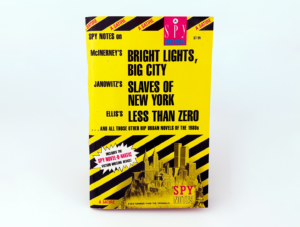
To make a parody work, it must look like the real thing. Mimicking the cover format wan't too difficult. We found a sculptor to make a Cliffs Notes-style skyline out of clay.
Cliffs Notes sued for trademark infringement under the Lanham Act (Cliffs Notes, Inc. v. Bantam Doubleday Dell), arguing that Spy Notes unlawfully copied its signature yellow-and-black striped cover design.
Although a lower court initially blocked distribution of the book, the U.S. Court of Appeals for the Second Circuit vacated the injunction. The court ruled that the First Amendment interest in free artistic expression outweighed the slight risk of consumer confusion, particularly because Spy Notes included clear parody cues—such as printing the words "A Satire" multiple times on the cover.
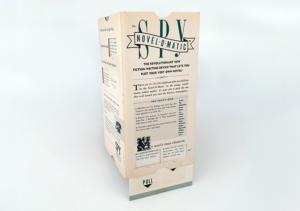
Extra-Special Bonus: Each copy of Spy Notes contained the Spy Novel-O-Matic, an interactive do-it-yourself fiction writing slide chart we designed to assist would-be young, world-weary urban authors in developing their own works of fiction.
The device offered 16,765,056 different plot possibilities.
Designers
Alexander Isley
Alexander Knowlton
Writer
Paul Simms
Contributors
Joanne Gruber
Erik Kaplan
Sally Lapiduss